HEMPHILL, WV COAL COMMUNITY |
PAGE 2 OF 2

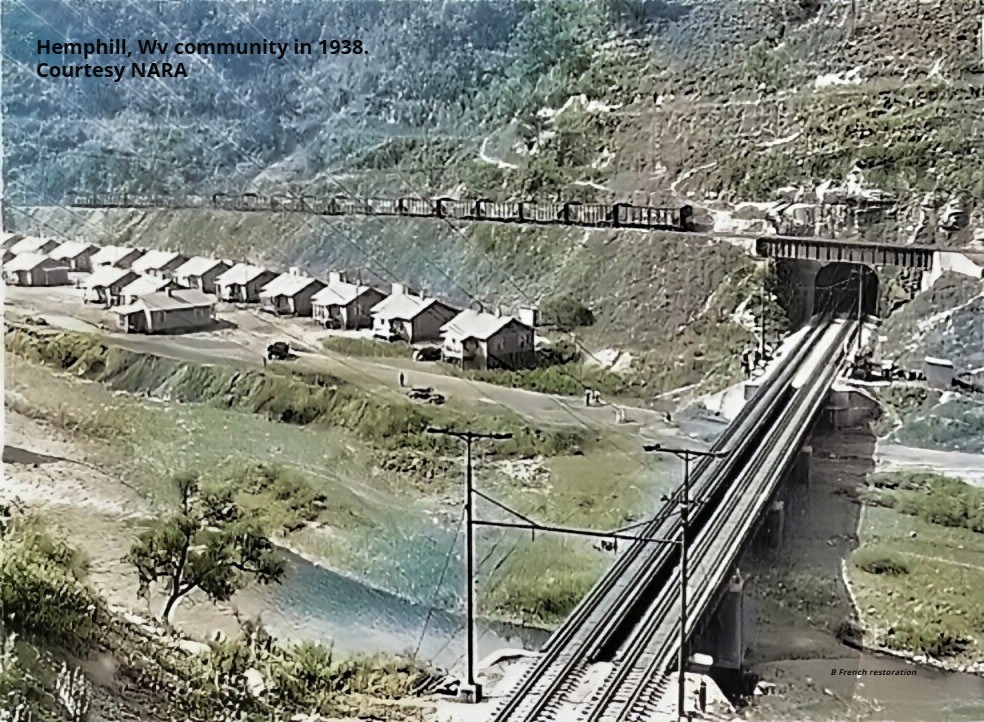
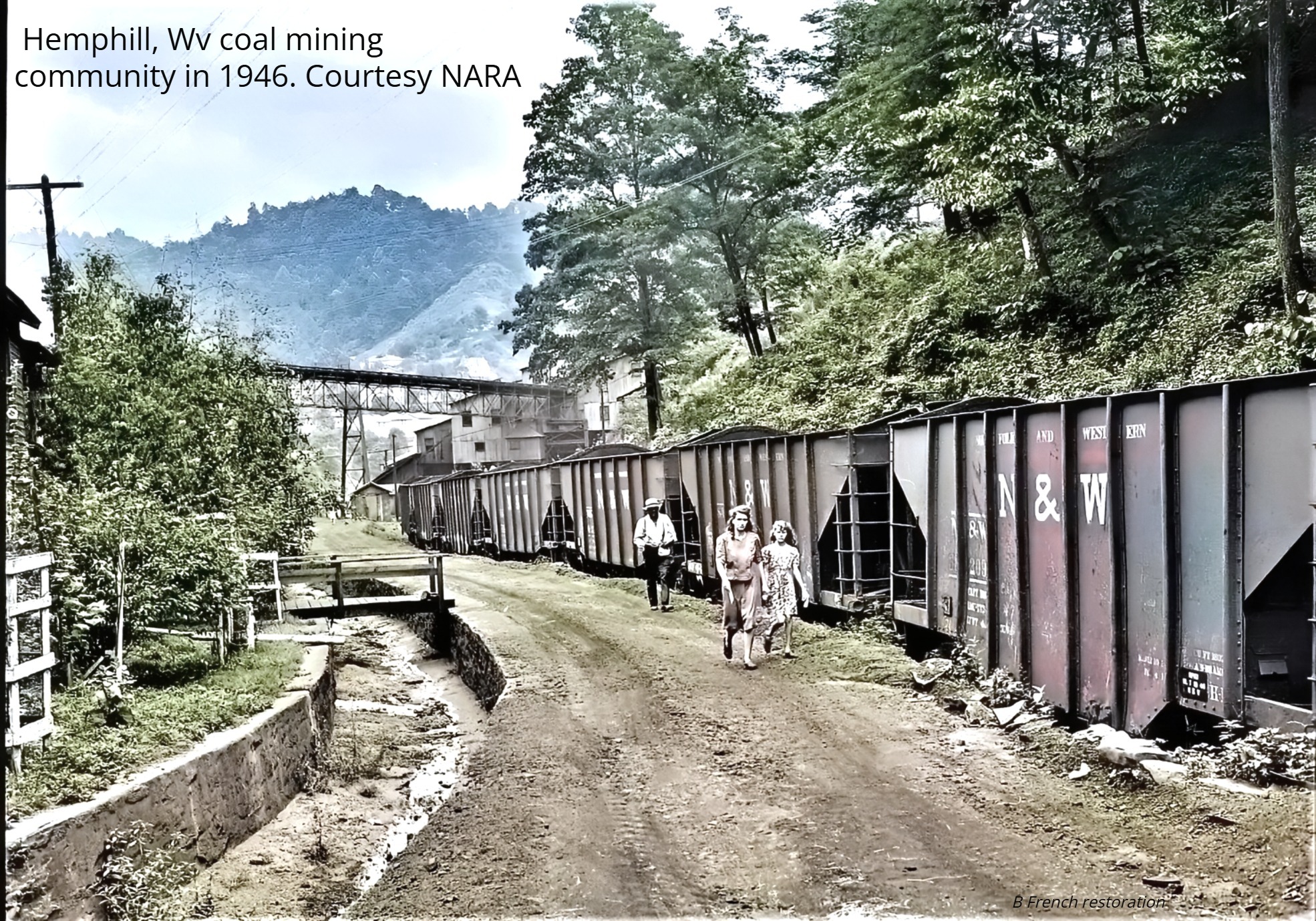
Hemphill , WV is located about 1.5 to 2.0 miles from Welch , WV. Hemphill is a small, unincorporated community located in McDowell County, West Virginia, United States. It sits along the Tug Fork River, nestled between the communities of Capels and Welch. Being "unincorporated" means it's not officially a city or town with its own local government. Instead, it's part of the larger county.
The area exploited the famous Pocahontas No. 3 and No. 4 coal seams, known for their high quality. The primary operations here were known as the Exeter Mines. The Exeter Mines were abandoned around 1949. Today, Hemphill is an unincorporated community. Interestingly, the abandoned mine shafts now serve as a primary source of public water for the surrounding area (Welch, Hemphill, and Capels).
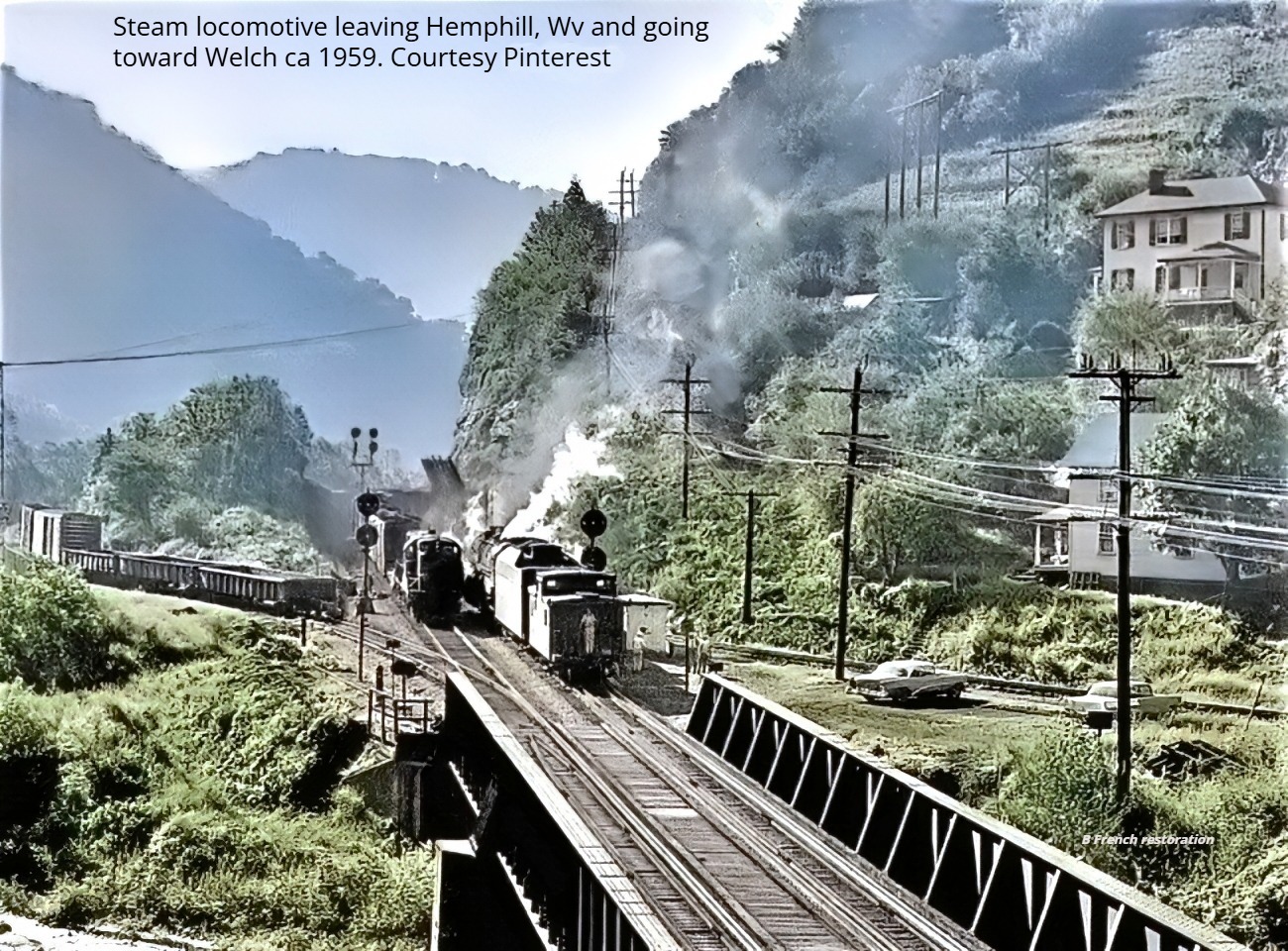
The development of the coal mining was closely tied to the expansion of the Norfolk and Western Railway. In fact, two major tunnels (Hemphill Tunnels No. 1 and No. 2) were constructed nearby around 1904 to help transport the massive amounts of coal being pulled from the mountains. While the tunnels served many mines in the region, they were built specifically to handle the output from the United States Coal and Coke Company (a subsidiary of U.S. Steel) and the Lake Superior Coal Company, which operated major mines in the immediate vicinity of Hemphill.Cutting through the Appalachian Plateau's sedimentary rock, these tunnels were essential for the transition to double-tracking (completed in 1909), which was necessary to move the "massive amounts of coal" you mentioned—often exceeding 3,000 tons per trainload even in the early 20th century.

A. J. Hemphill ( Alexander Julian Hemphill ) was a prominent figure in the railroad industry. While he served as the Secretary for Norfolk & Western, he later became the Chairman of the Board for the Guaranty Trust Company of New York. In 1905, Hemphill pivoted from the industrial sector to the financial sector, joining the Guaranty Trust Company of New York. This move coincided with a period where banks were increasingly taking control of the railroads they had funded. He started as a Vice President but was elected President in 1909. By 1915, he was named Chairman of the Board, a position he held until his death in 1920. Under his leadership, Guaranty Trust grew to become one of the largest and most influential trust companies in the world, often associated with the inner circle of J.P. Morgan's financial empire. |
|
|




Hemphill, WV - Exeter Shaft Mine - July, 8 1933.
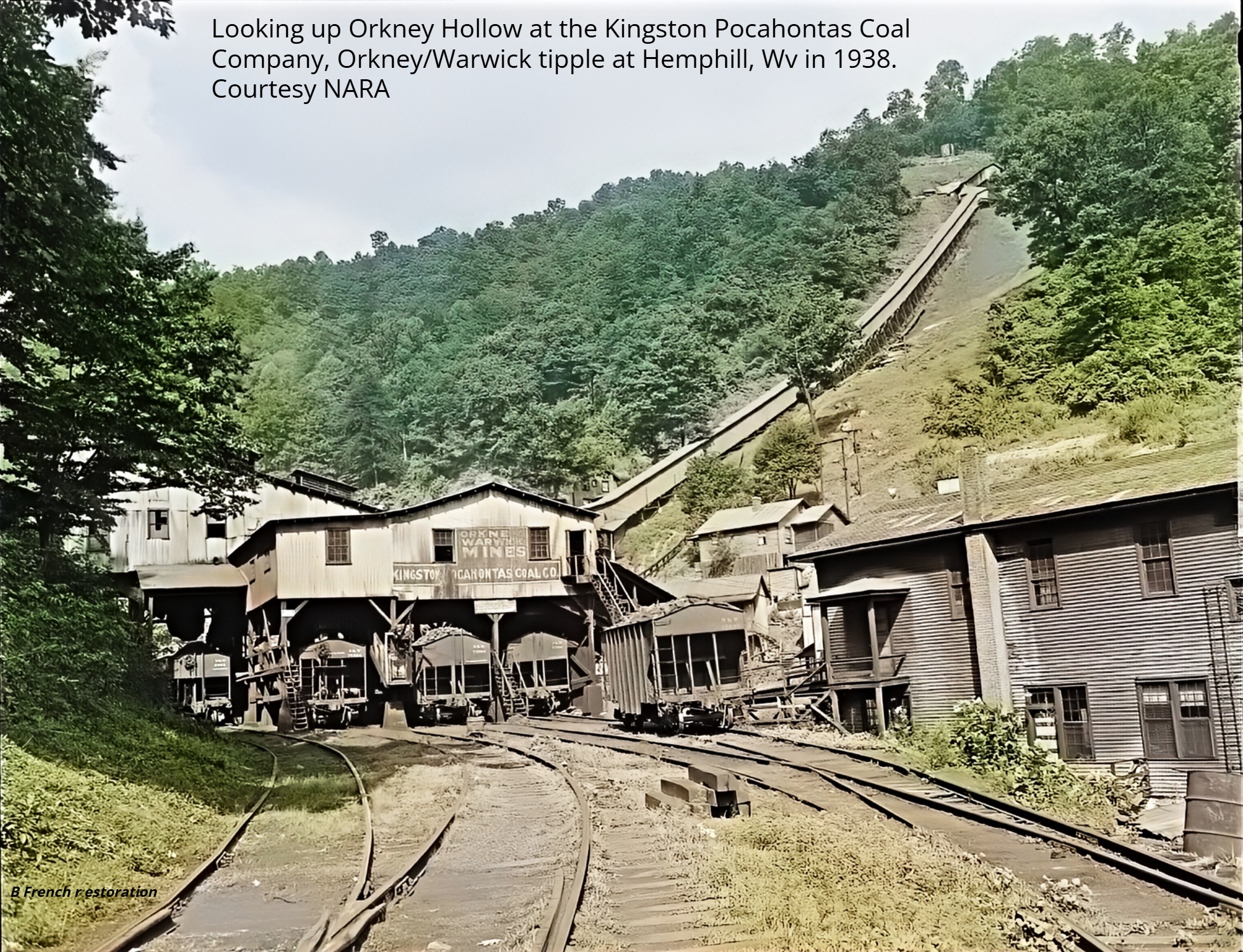
Located in McDowell County, just northwest of Welch, the Exeter Shaft Mine was a cornerstone of the Hemphill community during the peak of the Pocahontas Coalfield's production. While many mines in the region were "drift mines" (tunnels dug horizontally into the side of a mountain), the Exeter was a shaft mine, meaning it used vertical elevators to reach deep coal seams�specifically the high-quality Pocahontas No. 3 and No. 4 seams. The mine was operated by several prominent companies throughout the first half of the 20th century, most notably the Solvay Collieries Company, Central Pocahontas Coal Company, and the Kingston-Pocahontas Coal Company. Hemphill was built as a "company town" to support the Exeter, Orkney, and Warwick collieries. Unlike the wooden shacks found in poorer camps, Hemphill was known for its sturdy brick residences built for miners, many of which still stand today. The Exeter Shaft Mine (often referred to as the Exeter Mines) was a significant coal operation located in Hemphill, McDowell County, West Virginia, just northwest of the city of Welch.
Today, while the mine is no longer active for coal production, it remains locally important because it serves as a primary source of the public water supply for the city of Welch. The mine primarily extracted coal from the Pocahontas No. 3 and No. 4 seams, which are famous for producing high-quality, low-sulfur metallurgical coal. Unlike "drift" mines (which enter through the side of a hill), the Exeter mine used a vertical shaft to reach the deep-seated coal seams. This required massive ventilation fans and hoisting systems to move miners and coal. Over the decades, the mine was operated by several entities, including the Semmet-Solvay Company (a division of Allied Chemical). It was a classic "company town" operation where the community of Hemphill was built specifically to house the workforce.Since its abandonment in the mid-20th century, the Exeter Shaft has taken on a second life. Because the mine workings are vast and sit below the water table, they naturally flooded with groundwater. The abandoned mine acts as a massive underground reservoir, holding millions of gallons of water. In the late 1980s and early 1990s, the USGS conducted extensive studies on the Exeter Mines to determine if they could safely provide water to the surrounding communities. Today, the Welch Water Department utilizes the "Hemphill Coal Shaft" as a primary intake point.


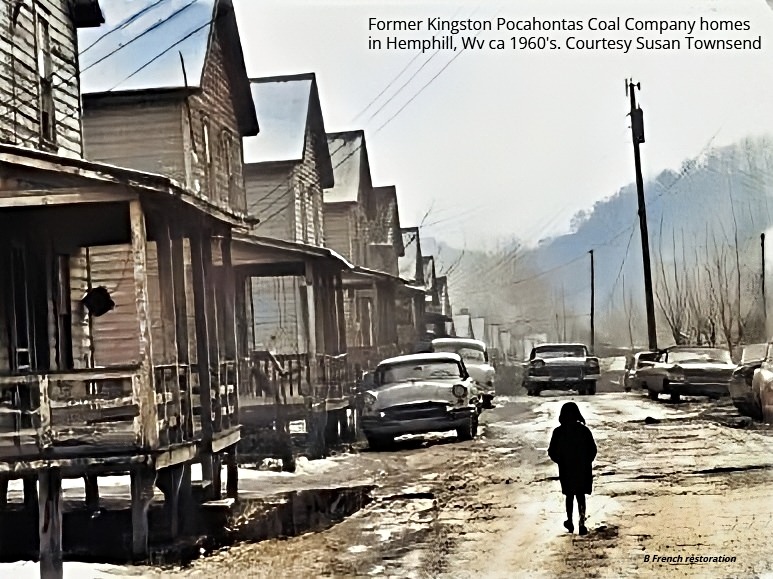
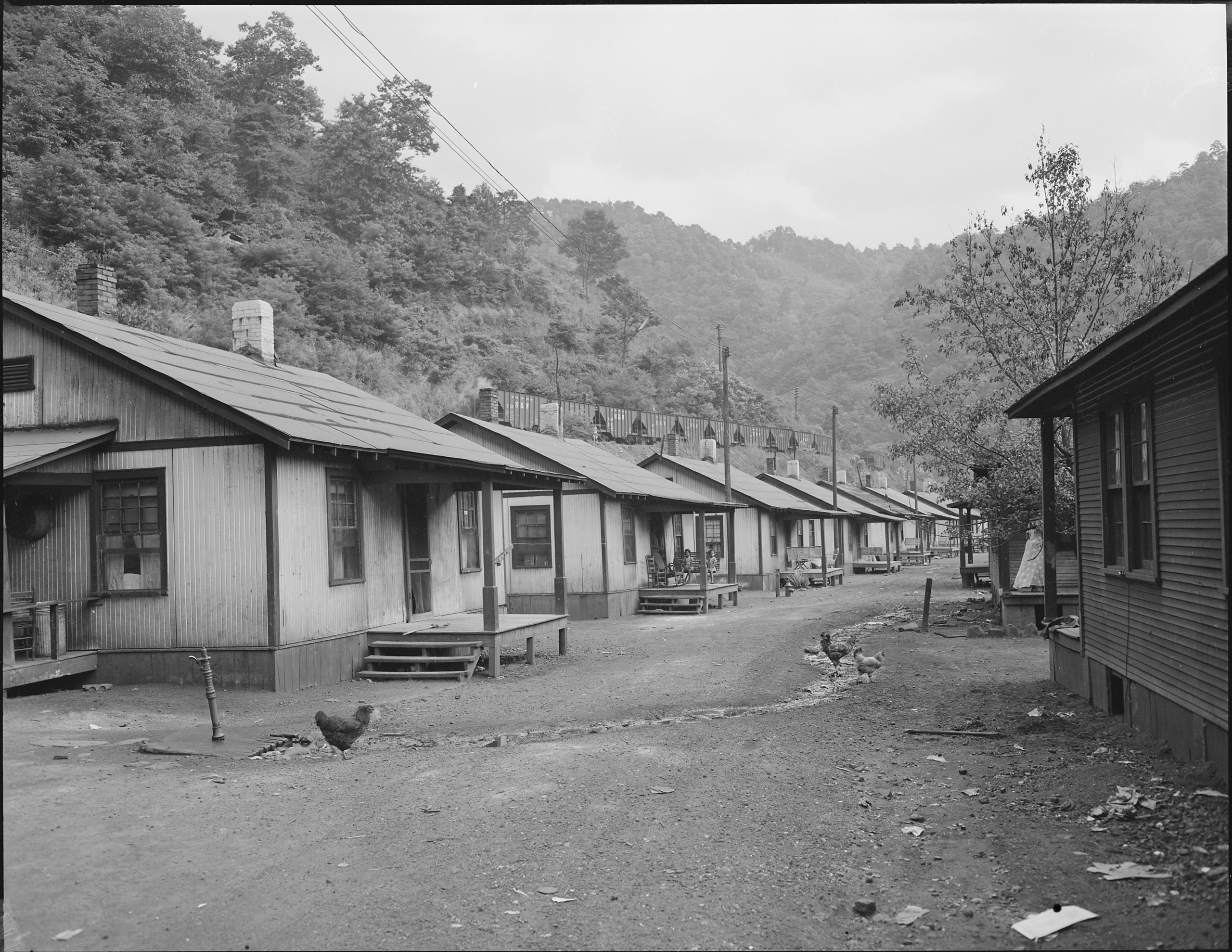
Exeter Shaft Mine area houses - Early 1900s.
Enhanced Photograph Provided By: Buddy French
|
HEMPHILL, WV COMMUNITY (PAGE 1 OF 2 )
HEMPHILL, WV COAL MINING INDEX
ADDITIONAL MINING COMMUNITIES INDEX
ADDITIONAL MASTER INDEX
|
|

|